The Best Flowers to Attract Hummingbirds in Every USDA Zone
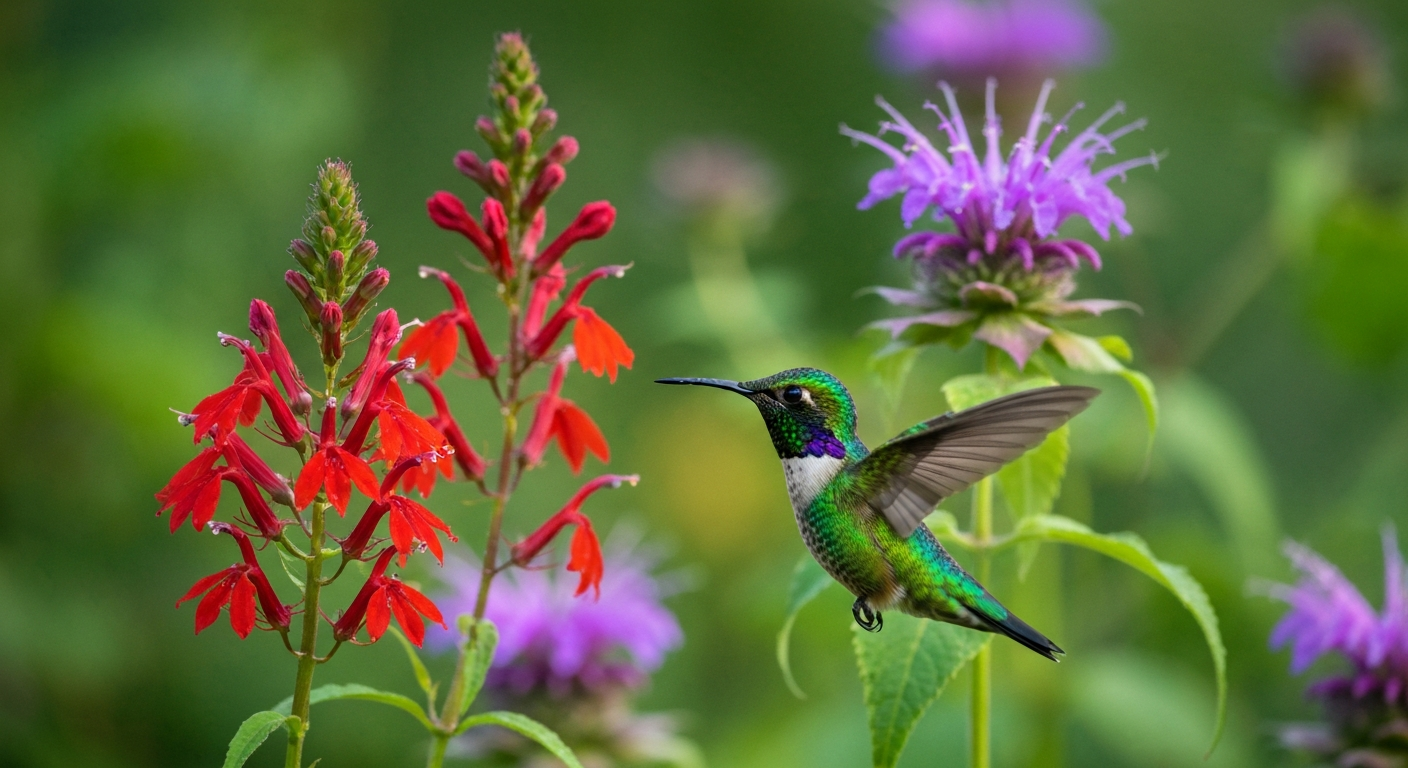
After trial and error on our East Texas homestead, I've learned that the best flowers for hummingbirds vary dramatically by climate zone. What blooms reliably in Minnesota won't survive a Texas summer, and what thrives in Arizona might struggle through a Vermont winter.
The key to creating habitat that truly supports hummingbirds is matching plants to your specific zone while understanding migration patterns. Ruby-throated hummingbirds arrive in northern zones weeks after they've already claimed territory in the South. Anna's hummingbirds on the West Coast don't migrate at all. Your flower selections need to work with these natural rhythms.
Understanding Hummingbird Flower Preferences Across Zones
Hummingbirds seek flowers with high nectar content, typically red or orange tubular blooms, though they'll visit flowers of any color that offer good nectar. Native plants almost always outperform non-natives because they've evolved alongside local hummingbird populations.
The timing matters as much as the flower choice. Early spring bloomers sustain migrants during their journey north. Mid-summer flowers support nesting pairs and growing young. Late-season bloomers fuel the southward migration and help year-round residents prepare for winter.
USDA Zones 3-4: Northern Resilience
Cardinal Flower (Lobelia cardinalis)
This native perennial produces brilliant red spikes from July through September, perfectly timed for ruby-throated hummingbirds raising their second broods. Cardinal flower tolerates wet conditions and partial shade, making it ideal for northern woodland edges. Plants often self-seed, creating natural colonies over time.
Bee Balm (Monarda species)
Native bee balm varieties bloom from June through August in zones 3-4. The tubular flowers in red, pink, or purple clusters provide abundant nectar. Wild bergamot (Monarda fistulosa) handles cold better than garden varieties. Divide clumps every three years to maintain vigor.
Trumpet Vine (Campsis radicans)
This vigorous native vine can handle zone 4 winters if planted in a protected location. Orange-red trumpet flowers bloom from July through frost, providing late-season nectar when other sources dwindle. Fair warning: trumpet vine spreads aggressively through underground runners.
Four O'Clock (Mirabilis jalapa)
An annual that self-seeds reliably, four o'clocks open their fragrant flowers in late afternoon. They bloom from mid-summer until frost, offering nectar during peak evening feeding times. The tubular flowers in red, pink, yellow, or white attract both hummingbirds and sphinx moths.
Hardy Fuchsia (Fuchsia magellanica)
While most fuchsias won't survive northern winters, this species handles zone 4 with protection. The drooping flowers bloom continuously from summer through frost. Cut back to ground level after the first hard freeze and mulch heavily.
USDA Zones 5-6: Extended Growing Seasons
Trumpet Honeysuckle (Lonicera sempervirens)
This native vine outperforms invasive Japanese honeysuckle in every way. Red tubular flowers bloom in waves from May through September. Unlike its aggressive cousin, trumpet honeysuckle won't smother other plants. The orange berries provide food for migrating songbirds in fall.
Salvia (Salvia splendens and natives)
Both annual scarlet sage and native salvias perform well in zones 5-6. Plant annual types after the last frost for continuous bloom until the first freeze. Native prairie sage (Salvia azurea) blooms later, providing September nectar for southbound migrants.
Penstemon (Penstemon species)
Native penstemons adapt to zone 5-6 conditions better than most perennials. Foxglove beardtongue (Penstemon digitalis) produces white flowers in early summer. Red penstemon varieties bloom later, extending the nectar season. Most species prefer well-drained soil and full sun.
Butterfly Weed (Asclepias tuberosa)
This native milkweed produces orange flower clusters from June through August. While primarily visited by butterflies, hummingbirds regularly work the small tubular flowers. The deep taproot makes butterfly weed extremely drought tolerant once established. Never move established plants.
Flowering Quince (Chaenomeles species)
An early bloomer that provides nectar when hummingbirds first arrive in spring. The red, pink, or white flowers appear before the leaves, making nectar easily accessible. Choose varieties bred for cold hardiness in zone 5 gardens.
USDA Zones 7-8: Year-Round Potential
Coral Honeysuckle (Lonicera sempervirens)
In zones 7-8, this native honeysuckle often stays semi-evergreen, providing shelter as well as nectar. Peak bloom occurs in spring and fall, with scattered flowers throughout summer. The vine can reach 15 feet but responds well to pruning.
Turk's Cap (Malvaviscus arboreus var. drummondii)
A Texas native that thrives in zones 7-8, producing red turban-shaped flowers from summer through fall. The flowers never fully open, creating perfect hummingbird feeders. Plants spread by underground runners but aren't aggressively invasive.
Red Buckeye (Aesculus pavia)
This small native tree blooms in early spring with red flower clusters, providing crucial nectar for arriving hummingbirds. Red buckeye tolerates shade and adapts to various soil types. The nuts are toxic to humans but wildlife-safe.
Flame Acanthus (Anisacanthus quadrifidus var. wrightii)
Native to Texas and spreading north, this perennial produces orange-red flowers from late summer through frost. The long bloom period makes it invaluable for supporting hummingbirds preparing for migration. Flame acanthus handles drought and poor soil.
Mexican Mint Marigold (Tagetes lucida)
This perennial herb produces small yellow flowers that hummingbirds visit regularly. Blooming from August through October, it provides late-season nectar when many other flowers have finished. The anise-scented leaves make excellent culinary herb.
Autumn Sage (Salvia greggii)
Native to Texas and Mexico, this compact perennial blooms almost continuously in zones 7-8. Red, pink, purple, or white flowers appear from spring through fall. Autumn sage requires excellent drainage but tolerates extreme heat once established.
USDA Zones 9-10: Subtropical Abundance
Bottlebrush (Callistemon species)
These Australian imports have naturalized across the South, producing distinctive red brush-like flowers that hummingbirds favor. Bloom periods vary by species, with some flowering year-round in zone 10. Bottlebrush tolerates salt spray in coastal areas.
Turk's Turban (Malvaviscus penduliflorus)
Related to the hardier Turk's cap, this species produces larger red flowers and grows taller. In zone 9-10, it can reach 6 feet and bloom nearly year-round. The pendulous flowers are perfectly shaped for hummingbird bills.
Firebush (Hamelia patens)
This native shrub produces orange-red tubular flowers almost continuously in zones 9-10. The berries feed migrating songbirds while the flowers sustain resident hummingbirds. Firebush can reach 8 feet but responds well to pruning.
Pride of Barbados (Caesalpinia pulcherrima)
The orange and red flowers with prominent red stamens bloom year-round in zone 10, most of the year in zone 9. This small shrub attracts both hummingbirds and butterflies. In zone 9, it may die back in winter but usually returns from the roots.
Shrimp Plant (Justicia brandegeana)
The curved flower spikes resemble their namesake and produce white flowers from red bracts. In zones 9-10, shrimp plant blooms almost continuously. The unusual flower structure seems designed specifically for hummingbird bills.
Mexican Honeysuckle (Justicia spicigera)
This shade-tolerant perennial produces orange flowers from late summer through fall. Native to Mexico but hardy through zone 9, it provides crucial nectar when other sources become scarce. The velvety leaves distinguish it from other Justicia species.
Timing Your Garden for Maximum Impact
The best flowers for hummingbirds create succession blooming throughout the season. In northern zones, this means early bloomers like flowering quince, mid-season producers like bee balm, and late flowers like cardinal flower. Southern gardeners can maintain nearly continuous bloom with careful plant selection.
Migration timing affects flower choice significantly. Ruby-throated hummingbirds typically arrive in zone 7 by mid-March but don't reach zone 4 until May. Plan early flowers accordingly. Fall migration reverses this pattern, with northern birds departing by September while southern populations may see migrants through October.
Native vs. Non-Native: Making the Right Choice
Native plants consistently outperform exotics in providing quality nectar and supporting hummingbird populations. They've evolved together, creating perfect partnerships. Native flowers also support the insects that hummingbirds need for protein, especially during nesting season.
That said, some non-natives earn their place in hummingbird gardens. Annual salvias, four o'clocks, and properly managed flowering vines can extend bloom seasons and fill gaps in native flower succession. The key is balance — aim for 70-80% native species with carefully chosen non-natives filling specific needs.
Creating Year-Round Habitat
In zones where hummingbirds remain year-round, winter nectar sources become crucial. Bottlebrush, flowering quince, and some salvia species provide cold-season flowers. Even in zones where hummingbirds migrate, late-blooming flowers fuel their southward journey.
Consider planting in layers: ground-level flowers, shrubs at various heights, and flowering vines or trees. This creates feeding opportunities at different levels and provides shelter between feeding sessions.
The most successful hummingbird gardens combine strategic flower selection with reliable nectar sources. Here on our homestead, we maintain feeders filled with quality nectar mix to supplement the flowers, ensuring our residents and migrants never go hungry regardless of weather or bloom cycles.
Match your flower choices to your zone, time them with migration patterns, and favor natives when possible. The hummingbirds will find you.
Flowers provide natural nectar — our mix fills in the gaps between blooms.
Next Batch Waitlist